
Decolonising Creative Writing
This international project brought together students and educators from the UK and Argentina to collaborate on creative writing, intercultural learning, and community engagement. Participants developed English-language educational materials celebrating local Argentine histories, cultures, and community figures, while promoting decolonising approaches to language education, intercultural citizenship, and social responsibility.
Five biographies of influential figures from Bahía Blanca were co-created and published in English, enabling local learners to study the language through the stories, achievements, and cultural heritage of their own community. See coverage in La Nueva.
An interview with Dr Leticia Yulita, highlighting her work on intercultural education and UK–Argentina collaborative projects.
University of East Anglia students participating in the “Decolonising Creative Writing” project were welcomed in Bahía Blanca by the Mayor, Héctor Gay, during their intercultural exchange with Instituto Juan XXIII. See Instagram post.
Examples of project activities included:
- Co-creating English-language readers based on the lives and achievements of influential figures from the local Argentine community.
- Developing an interactive murder mystery for English language learners that incorporated Argentine cultural perspectives and characters.
- Engaging with local communities, including participation in Mapuche New Year celebrations and intercultural activities.
- Collaborating with schools, teacher education programmes, and community organisations to support culturally responsive language learning.
With special thanks to Prof. Cecilia Cicolini, MA for her exceptional leadership and support during this project.
AULC Decolonising Language Teaching Manifesto
On behalf of the Association of University Language Communities (AULC), Dr Leticia Yulita led the development of a national manifesto for Decolonising Language Teaching. The initiative brought together language departments from 12 UK universities, all of which have committed to embedding anti-racist approaches across their teaching and learning practices.
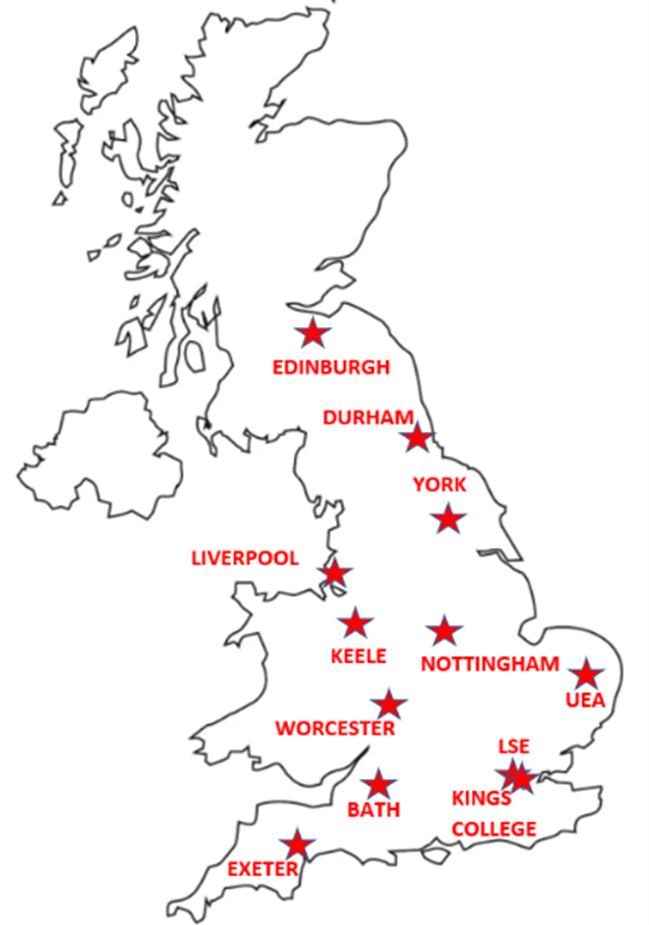
Decolonising the curriculum: Deconstructing, decentring and diversifying language teaching
The network is particularly committed to challenging established ways of thinking, knowledge production, pedagogies and research practices by drawing on the experiences of practitioners in the Global South in particular but also elsewhere. The goal is to critically reflect upon the epistemological, theoretical, methodological and pedagogical foundations of our everyday work in classrooms and informal contexts.
To find out more:
Zembylas, M. & Porto, M. (2025). Epistemic and moral tensions in student activism: the potential of decolonial love in an Argentine university. International Journal of Qualitative Studies in Education, 1–22. https://doi.org/10.1080/09518398.2025.2572461
Porto, M. & Byram, M. (2022). Locus of enunciation: Insights for intercultural language teaching. Language, Culture and Curriculum, 35(4), 404–420. https://doi.org/10.1080/07908318.2021.2023562